What to engrave when you don't know what to say.
A short, practical way to find words that already belong to the two of you — before you shorten them to fit a pendant.
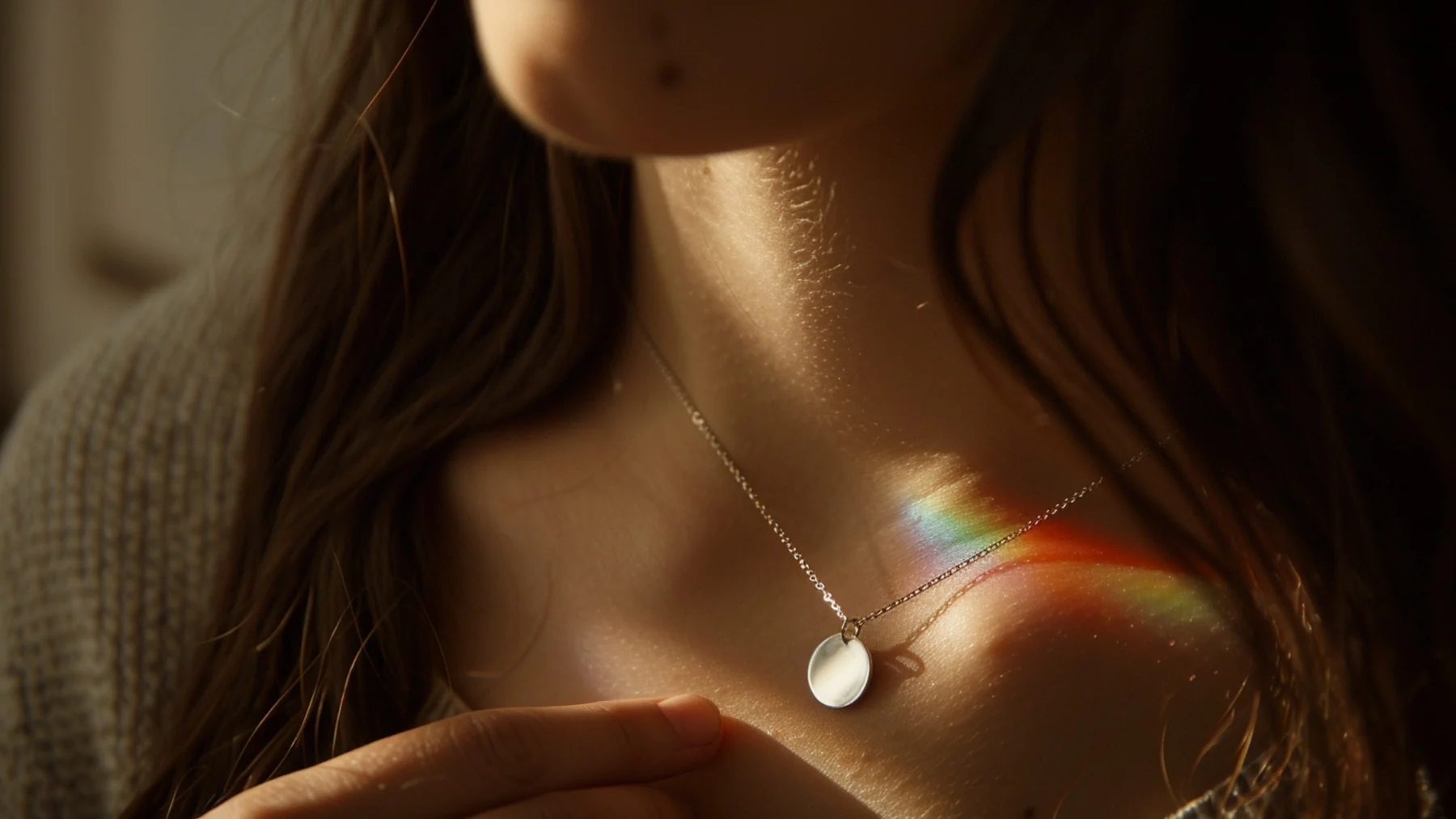
Most engraving decisions start in the wrong place: a list of quotes. The better starting point is the language you already use with the person receiving the piece. A nickname, a date, the way someone signs a card, a sentence you have both repeated for years — these are more likely to still mean something after the novelty of the gift has worn off.
Before you open a search tab, spend ten minutes with what you already have. This is not a creative exercise. It is a sorting exercise.
Collect first, edit later
Open the last few messages you saved. Read the back of a birthday card. Look at how the person writes their name, and whether they use a shortened version with you. Write down anything that repeats. Do not shorten it yet, and do not correct the spelling. Keep the punctuation and the small irregularities; they are often the part that makes the phrase recognisable.
A useful phrase usually falls into one of four groups:
- A name or nickname that only a few people use.
- A date that marks something the two of you remember without explanation.
- A short sentence you have said to each other more than once.
- A private reference — a place, a song, an ordinary object that carries a shared story.
If nothing surfaces, do not force a poetic line. A plain date and a first name can be more honest than a sentence borrowed from the internet.
Three tests before you commit
Say it aloud. Read the phrase the way you would say it to the person. If you stumble, the engraver will struggle too. If it sounds like a greeting card rather than you, keep looking.
Imagine it on a stranger's neck. A piece of jewelry is visible. A phrase that feels natural in a private message can feel exposing when a colleague can read it across a table. Ask whether the recipient would be comfortable answering “what does it say?” in an ordinary conversation. If the answer is no, consider putting the words on the inside of a clasp, the back of a pendant, or a card instead.
Check the space before you fall in love with the line. Read the product's engraving instructions. Ask whether spaces and punctuation count toward the character limit, which characters are supported, and whether the seller provides a preview showing the actual position and scale. A phrase that fits in a text message may be too long for a small pendant.
What tends to work on metal
Short phrases survive shrinking better than full sentences. Lowercase letters can look quieter and more modern; capitals can look formal and commemorative. Dates can be written in several orders, so choose the one the recipient would recognise without doing arithmetic. A single initial can be enough if the piece already carries meaning.
Punctuation is worth deciding deliberately. A full stop can make a short phrase feel final. A comma can make it feel unfinished. An ampersand can look cramped in a narrow font. Ask for the preview and look at the punctuation at the actual size, not zoomed in on a screen.
What to avoid
Inside jokes that need a paragraph of explanation rarely survive the trip to metal. Quotations from films or songs can date, and the wording may be contested; check the original before you shorten it. Avoid words that only make sense in a private context, and avoid anything that reveals a medical, legal, or family detail the recipient has not chosen to share.
Trendy phrasing is another risk. A line that feels current this year may feel like a timestamp in five years. That is not automatically bad — a date is a timestamp too — but decide whether you want the piece to read as a moment or as a permanent statement.
Font, size, and the second reader
Script fonts can be beautiful and hard to read at small sizes. Serif fonts are usually more legible when the engraving is short. Ask the seller which font they recommend for the character count, and ask for the minimum recommended height. Look closely at similar characters in the preview: a capital I, a lowercase l, and the number 1 can collapse into the same shape.
Before approving production, copy the final text into a separate note. Read it aloud, then compare every character with the order preview. Check names, dates, accents, and spacing. Ask one other person to read it without context. A second reader catches repeated letters and missing punctuation that your eyes have already learned to skip.
Save the confirmation with the order details. If something is ambiguous — placement, a symbol, a line break — ask before production. Once the piece is engraved, the wording is part of the object.
The point of the exercise
The best engraving is not the most original sentence you can find. It is the sentence that already belongs to the relationship, made small enough to carry. That is why the collection step matters more than the writing step. You are not inventing a message; you are noticing one that has been there for a while.
If you are still choosing between two lines, read both again the following morning. The one that feels obvious is usually the one that was already yours.
An editorial guide from Ethan2040, a journal by HeartLume. For a closer look at how wording behaves on a pendant, read The words we keep.
Which words already belong to the two of you?
Checking the opening date…
Save this code if you want to open the note on another device. It is shown only once and cannot be recovered later.
Optional. We will send one email when this note opens, then delete the address. No marketing, no tracking.
Already saved a note? Use your recovery code.